A full HVAC replacement Visalia CA typically costs between $6,500 and $16,000, with final pricing depending on whether you choose a high efficiency heat pump or a traditional gas furnace. While gas furnaces offer lower upfront installation costs, heat pumps are often the better long term investment for California homeowners due to their superior energy efficiency in mild climates.
Navigating a failing air conditioner during a Visalia heatwave is more than a minor inconvenience; it is a direct threat to your home comfort and monthly utility budget. When your system begins to struggle against the intense Central Valley climate, you are faced with a complex decision that impacts your property value for the next decade. At Forge & Frame Trades, we believe that an HVAC system is a critical structural component that must be integrated with precision. This guide provides a definitive roadmap for your 2026 HVAC replacement. We will examine the specific indicators that your current unit is beyond repair, analyze current market costs for Tulare County, and weigh the efficiency of modern heat pumps against traditional gas furnaces. Furthermore, we will outline the latest tax credits and rebates available to help you maximize your return on this essential home upgrade.
Signs Your Visalia Home Needs an HVAC Replacement
Living in Visalia means your HVAC system faces a grueling workload, particularly during the months where triple-digit temperatures are the norm. Determining if your system requires a minor repair or a complete HVAC replacement Visalia CA involves analyzing both performance and economics.
A key diagnostic tool is the 20 degree rule. Standard air conditioning units are generally designed to create a 20 degree difference between the outdoor air and the cooled air inside your home. During a 105 degree July afternoon, if your system cannot pull the interior temperature down to at least 85 degrees despite running constantly, the unit is likely reaching the end of its functional life. In the Central Valley, this strain is often compounded by heavy dust accumulation from surrounding agricultural activity. Fine particulate matter from nearby orchards and fields infiltrates outdoor condenser coils, forcing the motor to work harder and significantly shortening the lifespan of the equipment compared to units in less dusty environments.
Financially, homeowners should apply the $5,000 rule to decide between repair and replacement. Multiply the estimated cost of a repair by the age of the unit. If the result exceeds $5,000, investing in a new system is typically the more prudent choice. For example, a $600 repair on a 10-year-old unit equals $6,000; this indicates that the funds are better spent on an upgrade than on a temporary fix for aging machinery.
Differentiating between a simple service call and a full overhaul is critical. A failed capacitor or a clogged drain line are routine maintenance issues that can be managed within comprehensive construction services. However, frequent refrigerant leaks or a failing compressor in a unit over a decade old are systemic failures. These issues usually signal that the equipment can no longer meet modern efficiency standards or safely regulate the climate of your home during our intense summers.
HVAC Replacement Costs in Visalia for 2026
Understanding the financial commitment is the logical next step once the $5,000 rule or the 20 degree rule indicates that a system's failure is imminent. In the current Visalia market, HVAC replacement costs for 2026 are influenced heavily by updated efficiency standards and local labor availability. For a full system replacement, which includes both the heating and cooling components, Visalia homeowners should budget between $6,500 and $16,000. If the existing furnace is still in peak condition and you are only looking for an AC-only replacement, the investment typically ranges from $4,800 to $10,500.
For a standard 2,000 square foot home in Tulare County, which generally requires a 3.5 to 4-ton unit to combat our summer extremes, a mid-range system install usually lands between $9,500 and $13,000. These figures fluctuate based on the Seasonal Energy Efficiency Ratio (SEER2) of the equipment. While entry-level units meet the minimum legal requirements, high-efficiency variable-speed systems represent a premium investment that sits at the top of the price range. These advanced units are often the better long-term choice for our climate because they can modulate their output, providing consistent dehumidification and cooling without the constant on-and-off cycling that wears down cheaper machinery.
System Configuration | Estimated Cost Range (Installed) |
|---|---|
Central AC Only (3-4 Ton) | $4,800 – $10,500 |
Full Gas/Electric System | $6,500 – $16,000 |
High-Efficiency Heat Pump | $11,000 – $18,000 |
Local homeowners do see a slight advantage regarding labor. Compared to coastal California markets, labor rates in the Central Valley remain more competitive, often providing a 10% to 15% savings on the installation portion of a quote. However, as a firm providing construction management for complex residential projects, we find that these savings are most effectively used to upgrade the quality of the equipment itself. Choosing a higher-spec unit ensures that the system can handle the unique dust and heat load of the region. This upfront premium is often mitigated by the fact that high-efficiency installs qualify for significant financial offsets, which are becoming a standard part of the modern guide to home electrification for California residents.
Heat Pump vs. Gas Furnace: The Central Valley Decision
Choosing between a traditional gas furnace and a modern heat pump is the most significant decision a Tulare County homeowner will make during an HVAC replacement Visalia CA. While natural gas has been the local standard for decades, California’s 2026 Title 24 energy standards and updated building codes have fundamentally shifted the landscape. The state is moving rapidly toward home electrification, making heat pumps the preferred choice for new installations and major residential renovations.
The primary technical advantage of a heat pump lies in its efficiency ratio. Unlike a gas furnace that creates heat by burning fuel, a heat pump moves existing heat from one place to another. This process is between 2.2 and 4.5 times more efficient than traditional combustion heating. Furthermore, a heat pump serves as a dual purpose system; it provides high efficiency cooling in the summer and consistent warmth in the winter, effectively consolidating your mechanical systems into a single, streamlined unit.
Feature | Gas Furnace + AC Split | High-Efficiency Heat Pump |
|---|---|---|
Energy Source | Natural Gas & Electricity | All-Electric |
Efficiency Ratio | 0.80 – 0.98 AFUE | 2.2 – 4.5 (COP) |
Functionality | Heating Only (Requires separate AC) | Integrated Heating & Cooling |
Primary Benefit | Lower upfront equipment cost | Superior efficiency & rebate eligibility |
Some local contractors historically avoided heat pumps, citing concerns about their performance during Visalia’s extreme summer heat. However, modern inverter technology has largely eliminated these performance gaps. Variable speed compressors allow the system to adjust its output in real time, maintaining comfort even when outdoor temperatures exceed 110 degrees. As a firm specializing in construction management, we recommend that homeowners view this as a strategic component of a broader guide to home electrification. The shift toward heat pumps is not just about environmental compliance; it is about installing hardware engineered for the future of the California power grid.
Available Rebates and Tax Credits for Tulare County Homeowners
The financial landscape for an HVAC replacement Visalia CA has shifted significantly due to aggressive new incentives designed to offset the higher upfront cost of high-efficiency equipment. By leveraging a combination of federal and state programs, homeowners can often reduce their net investment by several thousand dollars, making the transition to electric heat pumps financially superior to staying with gas.
At the federal level, the 25C tax credit allows homeowners to claim 30% of the project cost, with a specific annual cap of $2,000 for heat pump installations. Unlike a standard deduction, this is a dollar for dollar credit against your federal tax liability. Locally, the TECH Clean California program provides additional rebates that fluctuate based on regional funding, often providing mid-project incentives that contractors apply directly to the invoice.
For many Tulare County families, the High-Efficiency Electric Home Rebate Act (HEEHRA) represents the most significant opportunity. Depending on household income levels, HEEHRA can provide point-of-sale rebates up to $8,000 for heat pumps. When integrated into comprehensive construction services, these incentives bridge the price gap between traditional units and premium systems. Using professional construction management ensures your project meets the specific efficiency ratings required to qualify for these programs, turning a necessary utility upgrade into a strategic financial asset. Properly navigating these credits is a core component of any modern guide to home electrification for Central Valley residents.
Integrating HVAC with Whole Home Remodeling

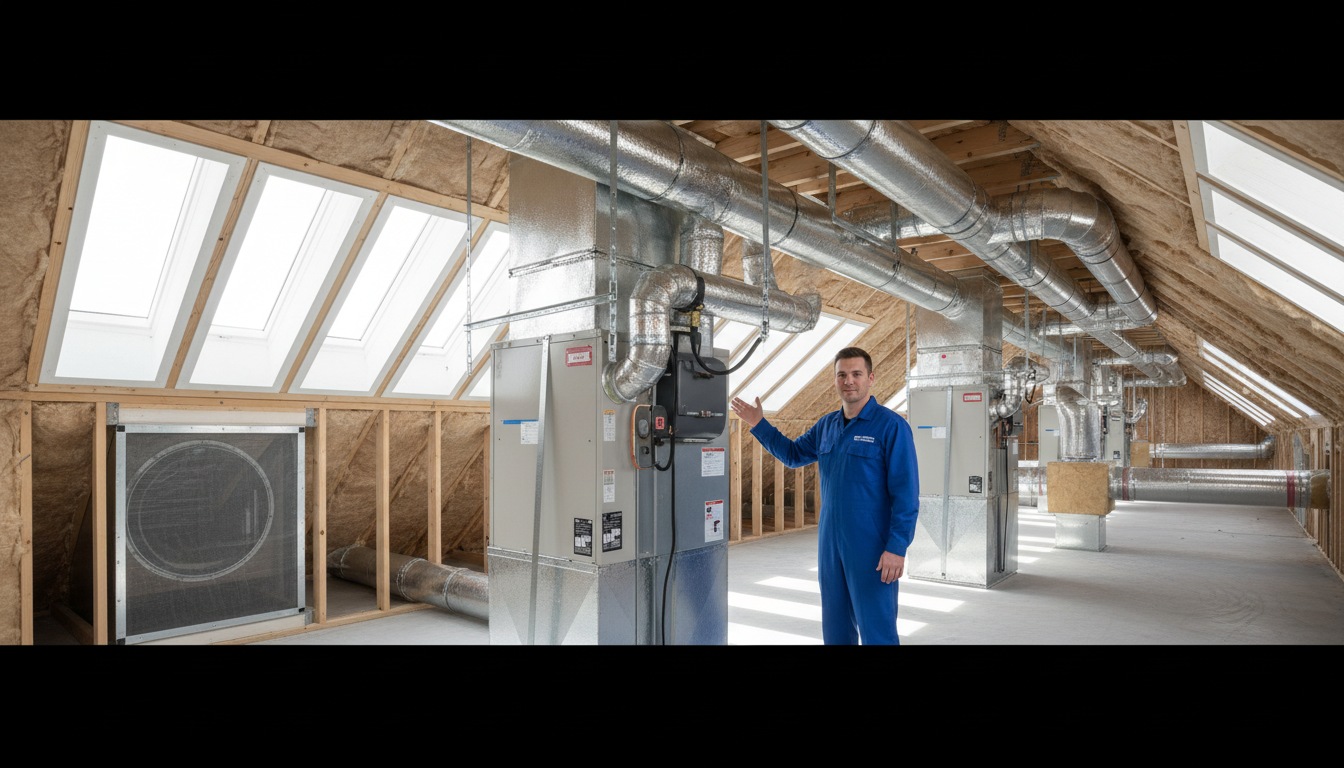
Navigating these credits is a strategic first step, but the true value of an HVAC replacement Visalia CA is realized when it is executed as part of a broader renovation. Treating mechanical systems as an isolated task often leads to missed opportunities for efficiency and long term comfort. When walls are open during a remodel or home addition, we gain direct access to the home’s ductwork, which is often the weakest link in Central Valley climate control. Many local homes suffer from duct leakage exceeding 20 percent, forcing even the best new units to work overtime. A remodel allows for professional sealing or resizing that would otherwise be cost prohibitive.
If your project involves expanding the square footage or upgrading to high-performance windows, a simple like-for-like unit swap is insufficient. Any change to the building footprint requires a new Manual J load calculation. This technical assessment accounts for the specific R-value of your new insulation and the solar heat gain of your windows to determine the precise tonnage required. Over-sizing a unit in a newly insulated home leads to short cycling and poor humidity control, while under-sizing leaves you vulnerable during 110-degree July peaks.
Using professional construction management ensures that your HVAC system is not fighting against the rest of the house. We coordinate the mechanical installation to work in harmony with the building's thermal envelope, ensuring that air delivery is balanced across every room. By integrating these comprehensive construction services, you avoid the common pitfall of installing a high-tech heat pump into a house that still leaks air through outdated vents or insufficient attic insulation.
How to Choose the Right HVAC Contractor in Visalia
Selecting the right partner for an HVAC replacement Visalia CA requires looking beyond the lowest bid. A qualified contractor must demonstrate a technical understanding of the unique thermal loads in the Central Valley, where triple-digit heat and heavy agricultural dust create a harsh operating environment.
Before signing a contract, verify the following credentials: - Licensing: Ensure the firm holds a valid C-20 Warm-Air Heating, Ventilating and Air-Conditioning license from the California Contractors State License Board (CSLB). - Certifications: Look for NATE (North American Technician Excellence) certification, which confirms the installers have mastered the complexities of modern variable-speed systems. - Visalia Specifics: Ask how they address soil and dust infiltration. A knowledgeable local contractor will recommend specific filtration strategies to protect your new evaporator coils from the fine particulate matter common in Tulare County.
Critically, demand a Manual J load calculation. Avoid any technician who suggests a size based solely on the tonnage of your existing unit. A simple like for like swap ignores improvements made to your home's envelope through comprehensive construction services, such as updated insulation or high-performance windows. Accurate sizing prevents short-cycling, which is the primary cause of premature equipment failure in our climate. If your installation is part of a larger renovation, utilizing professional construction management ensures the mechanical specs align perfectly with your broader guide to home electrification goals.